Item:
Age:
Details:
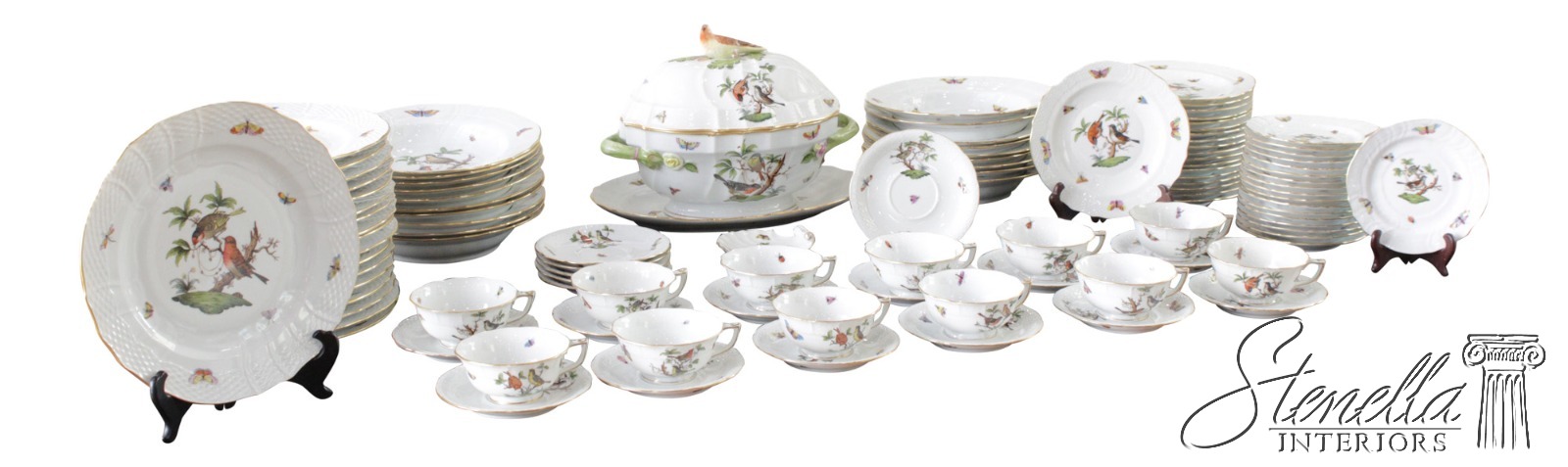
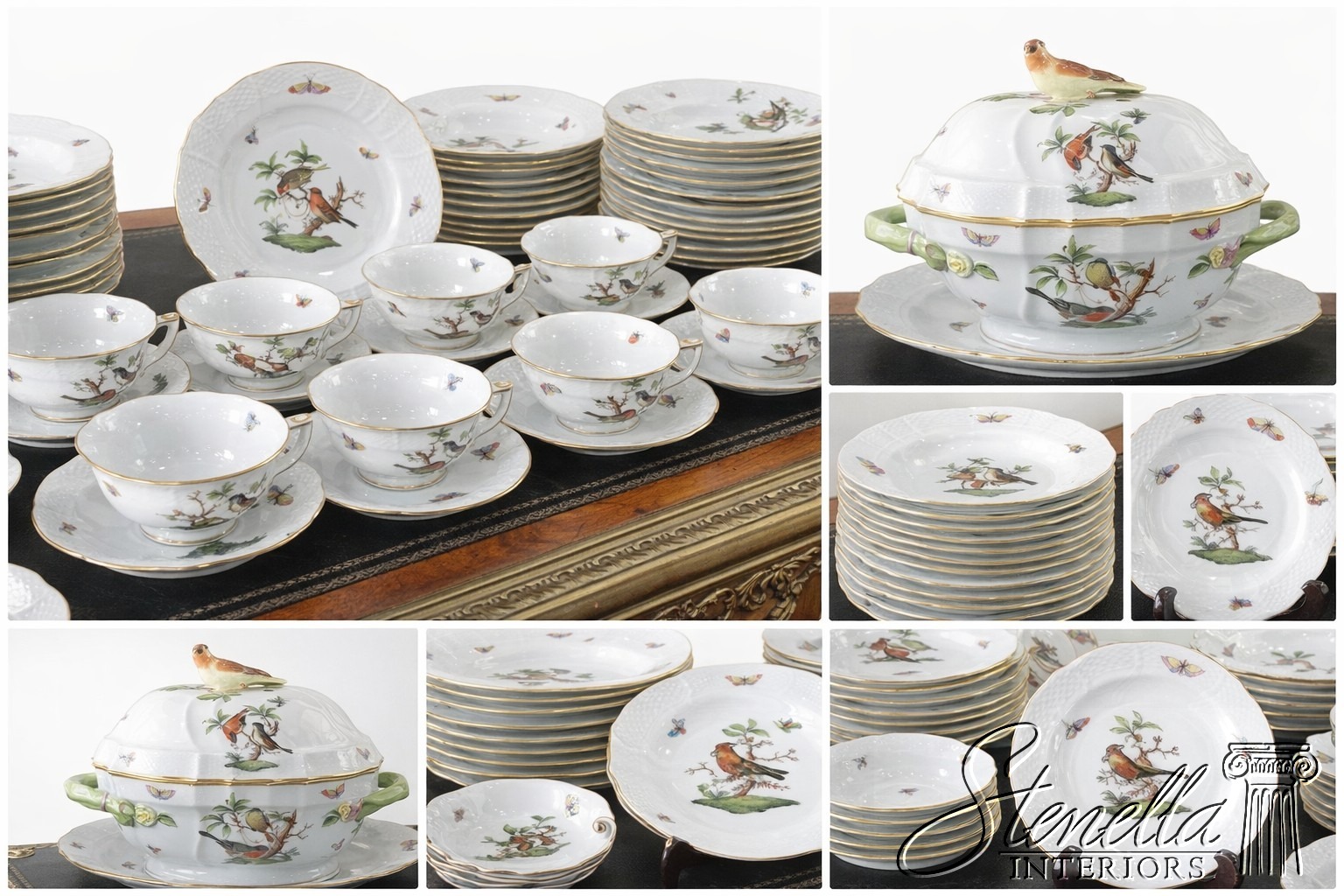
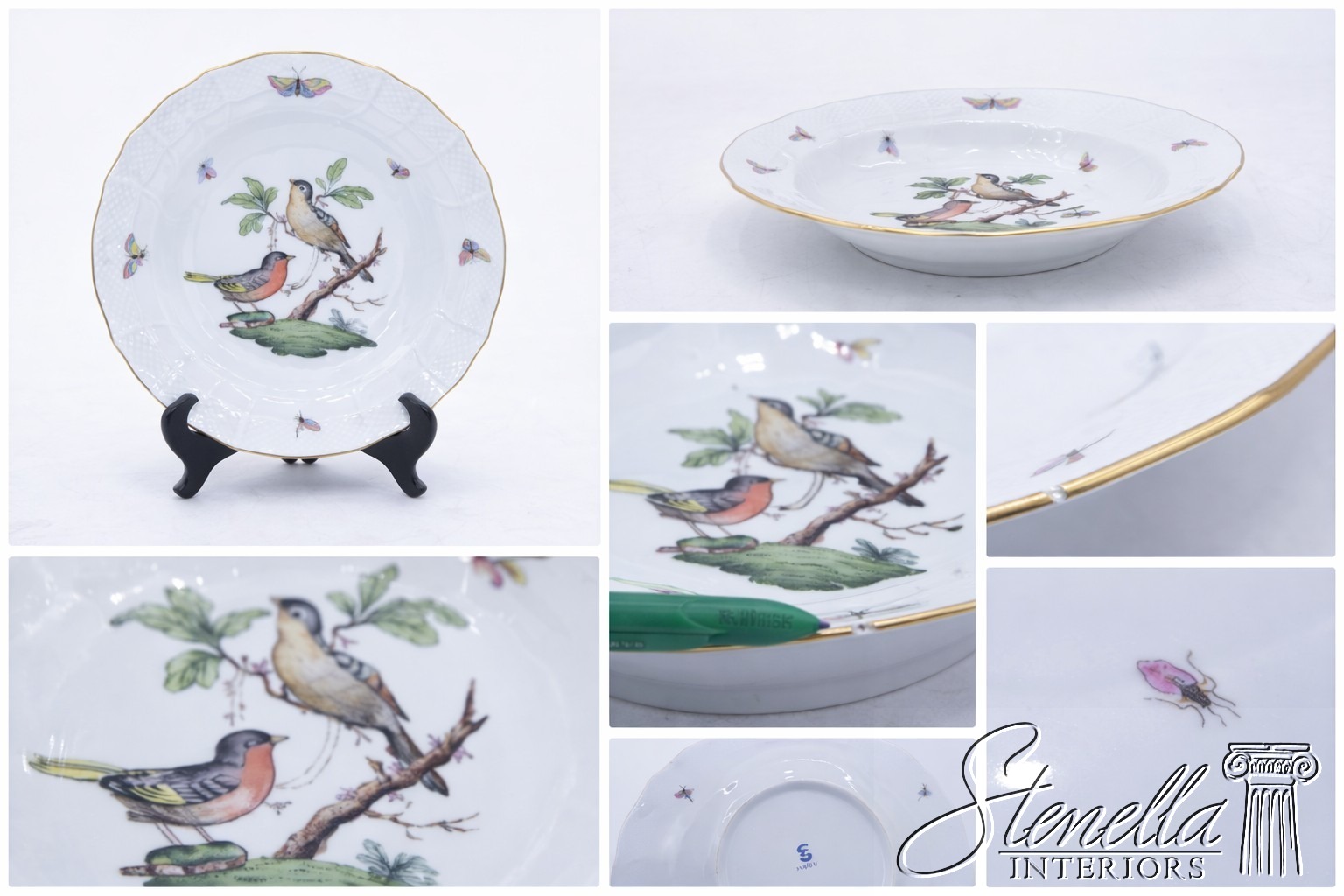
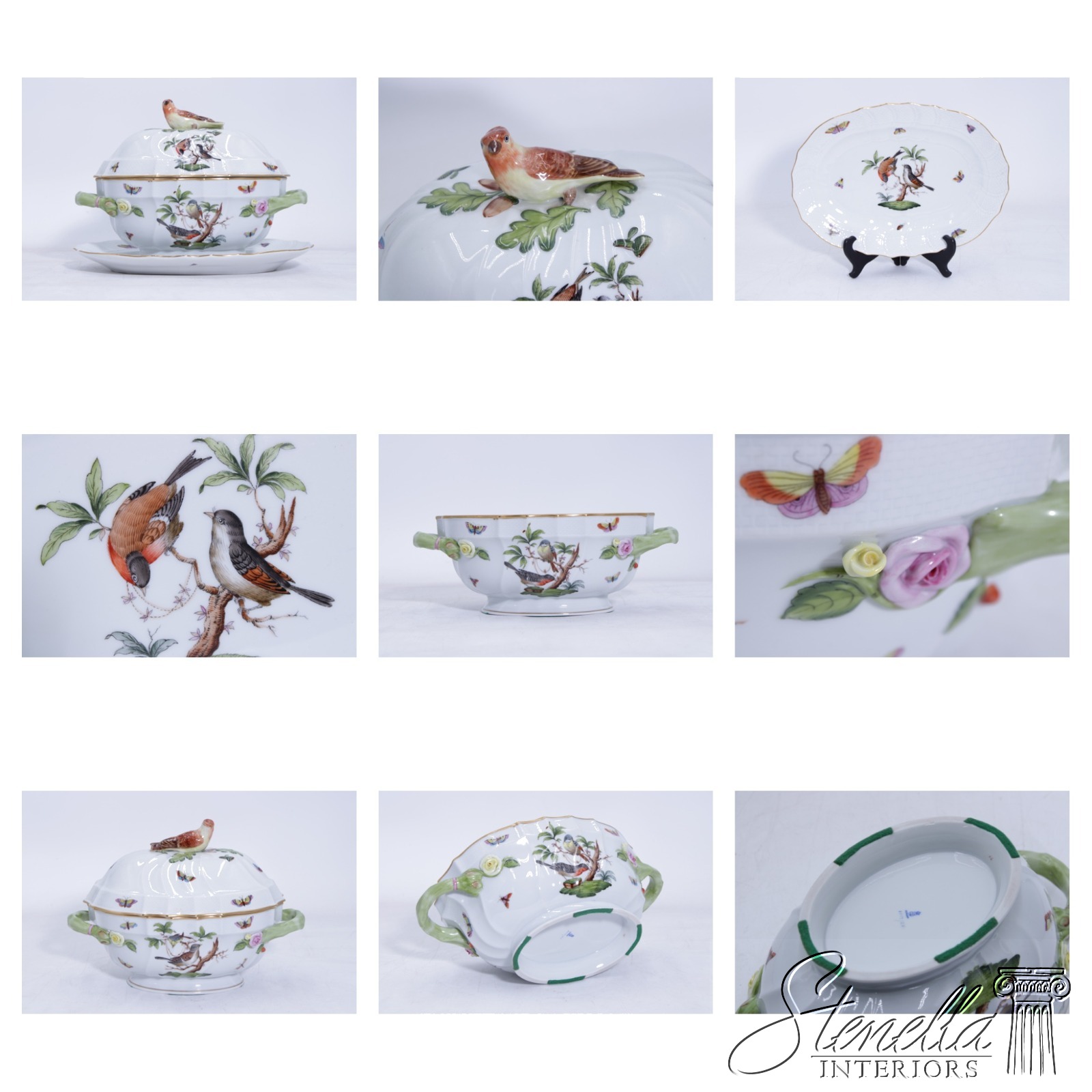
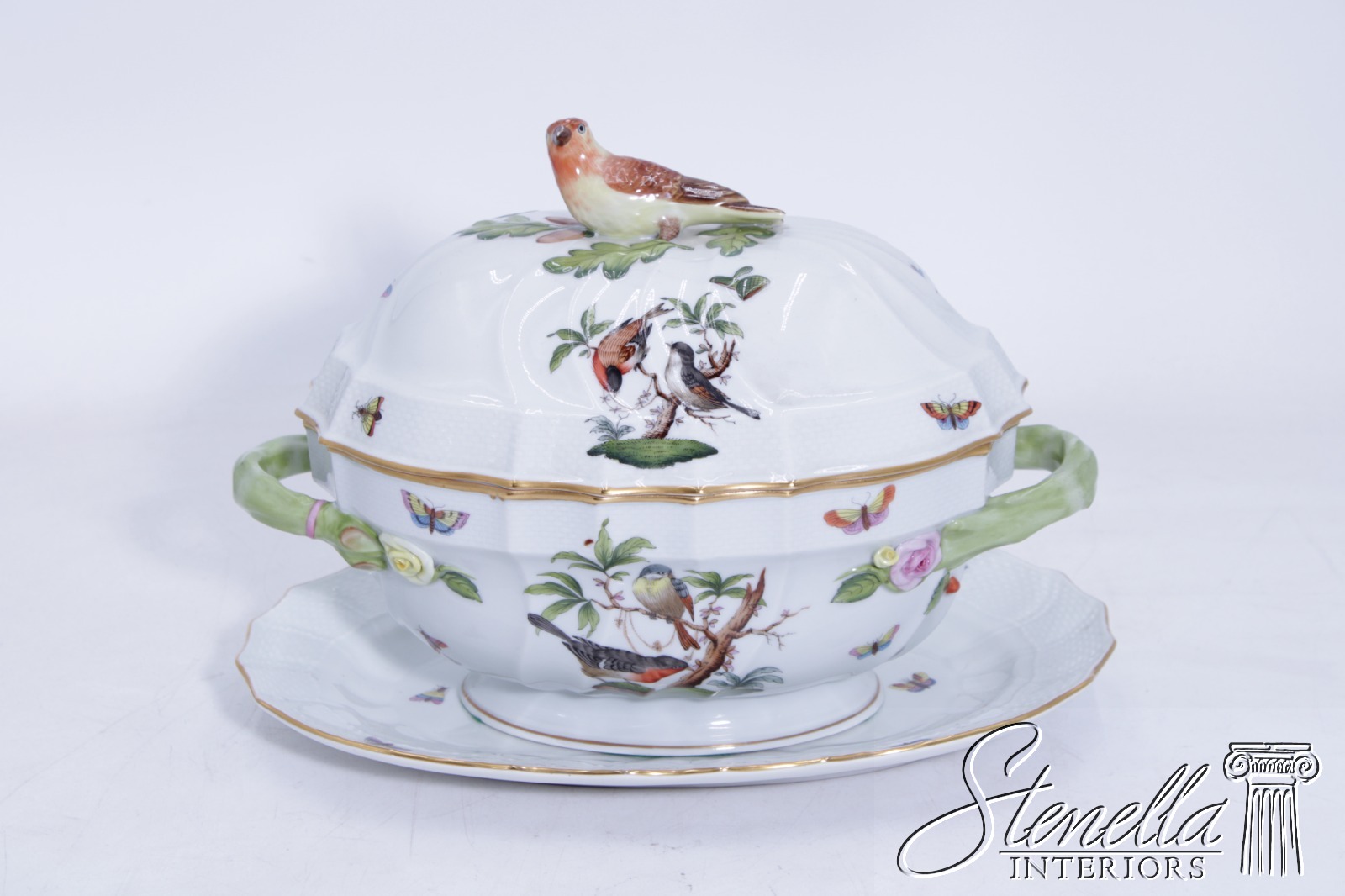
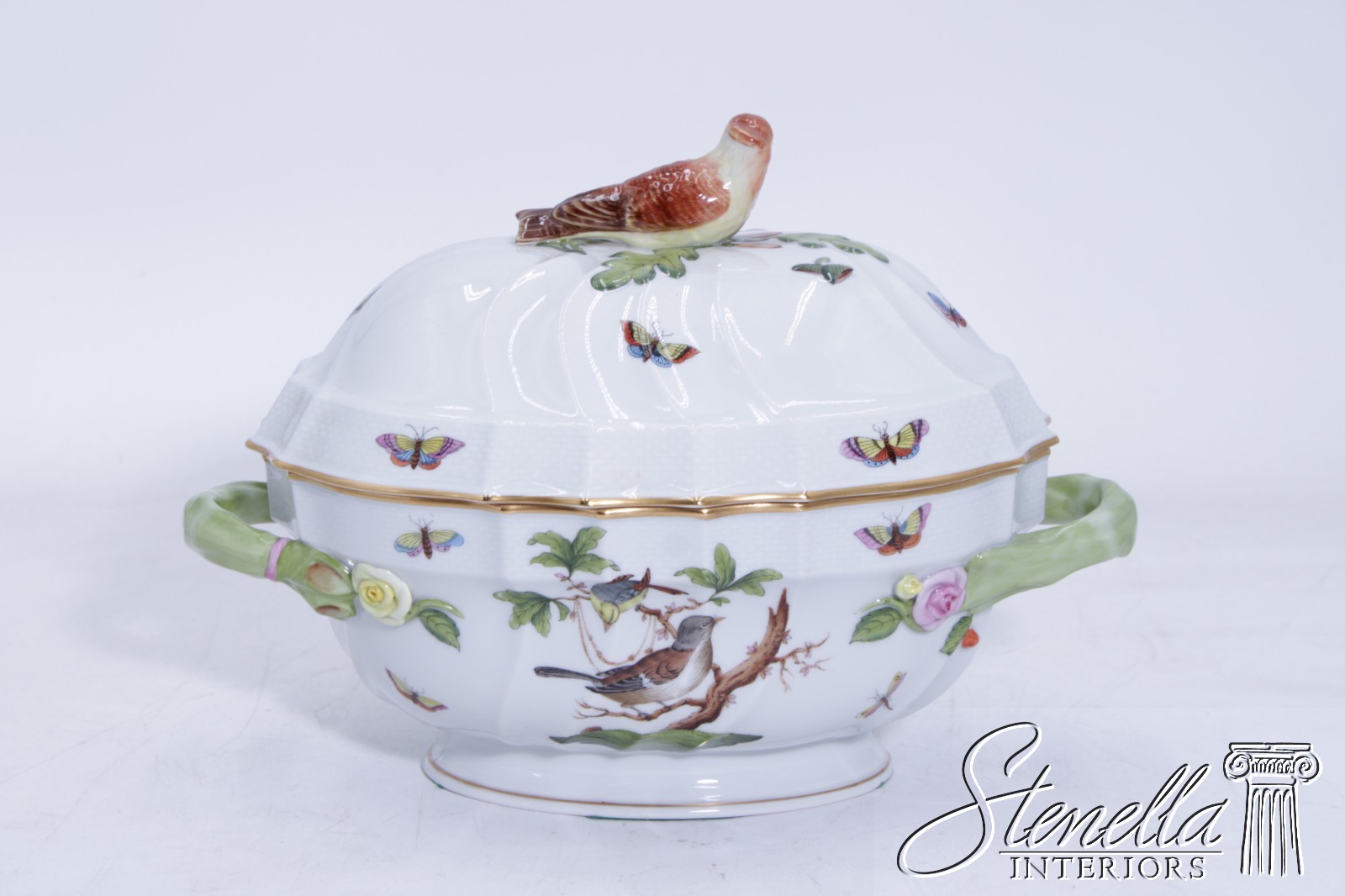
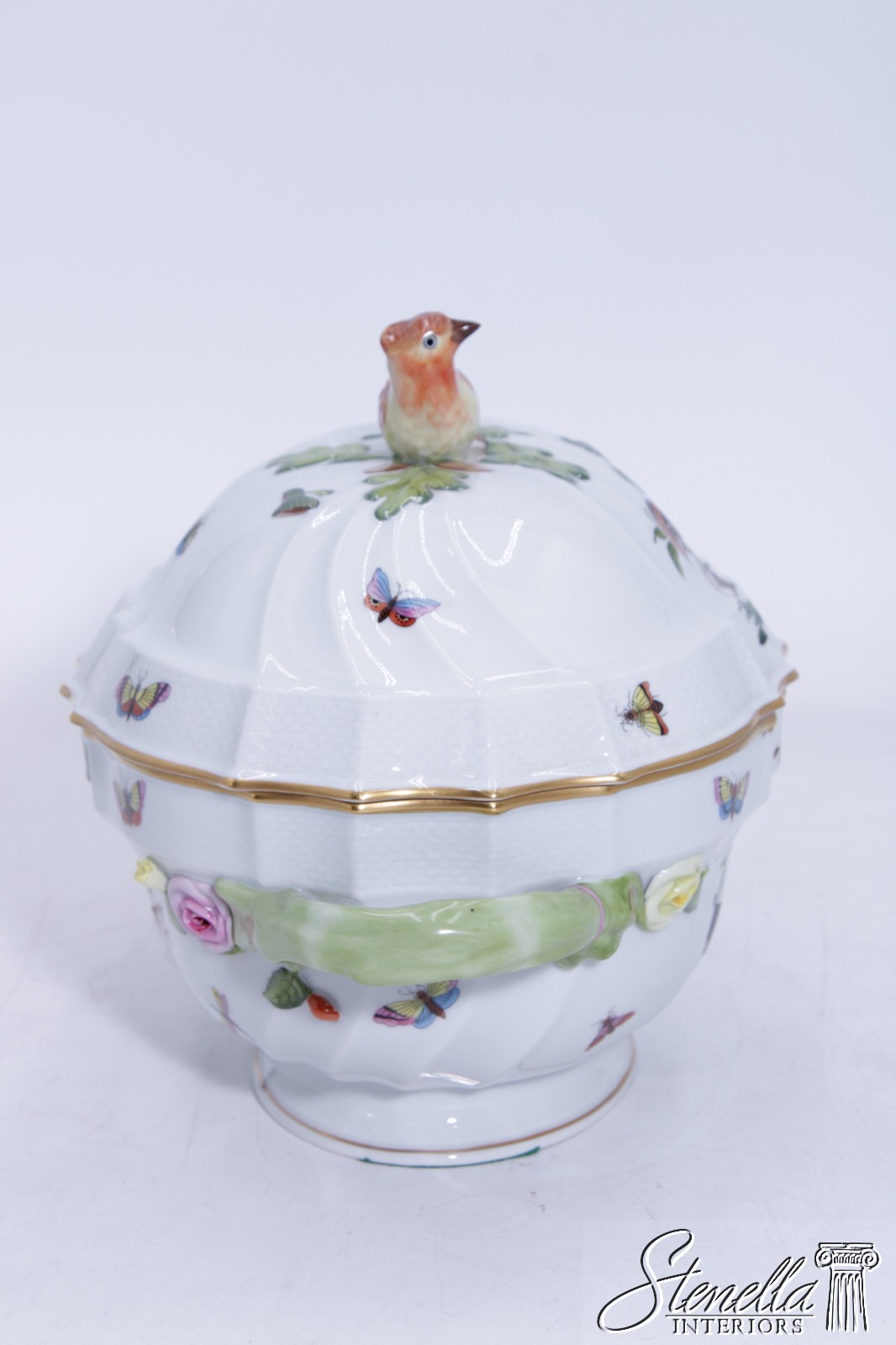
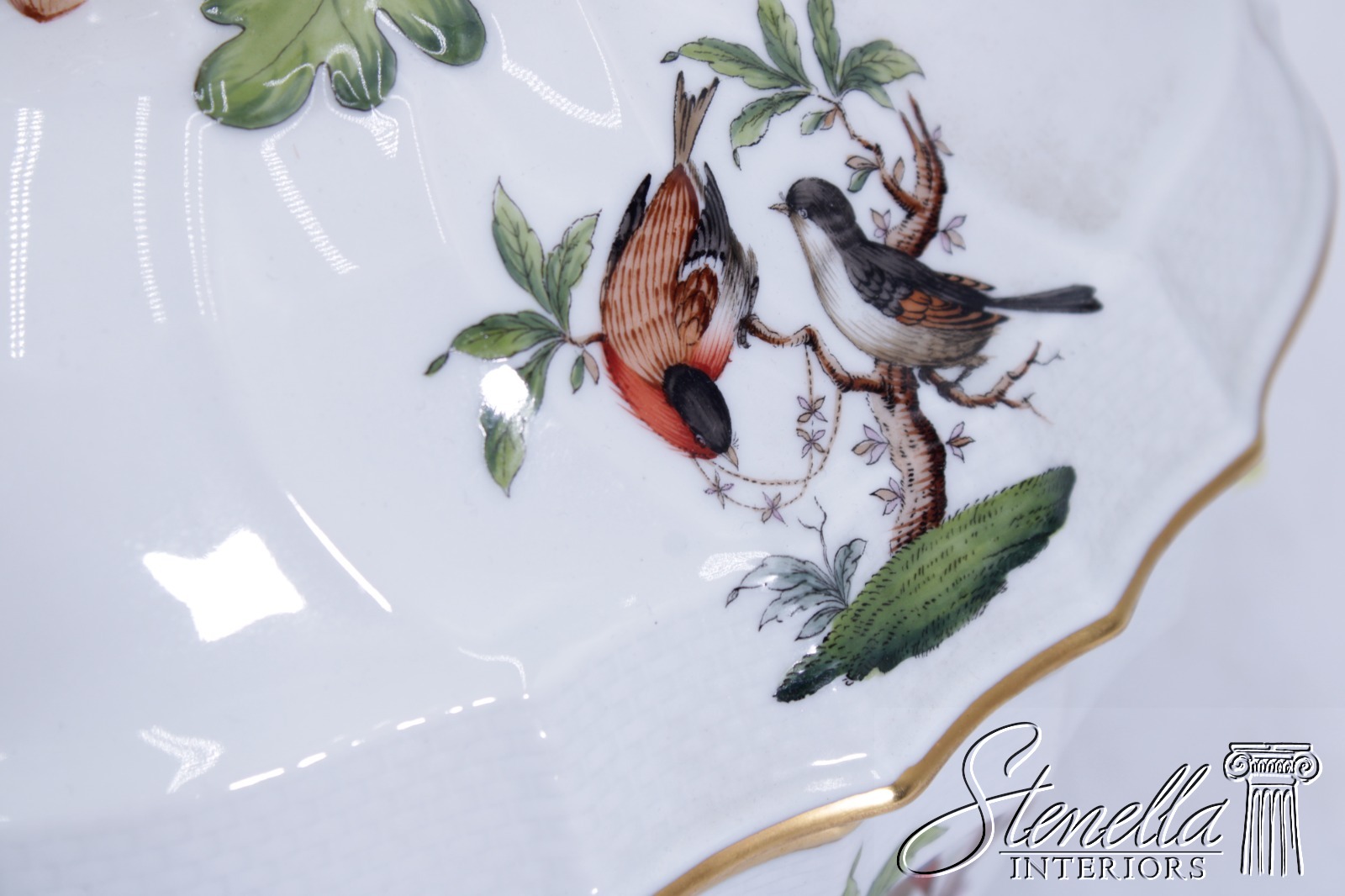
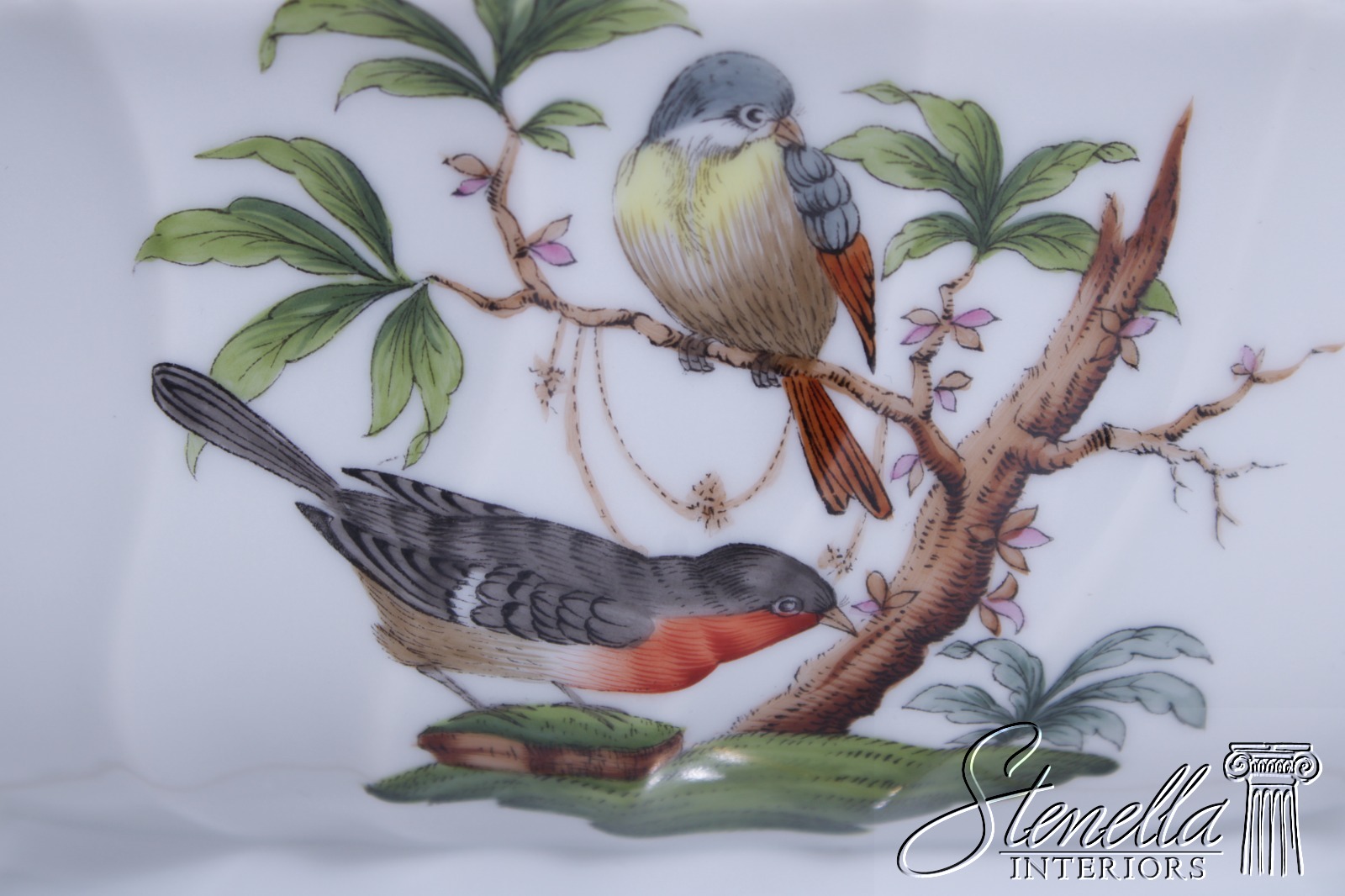
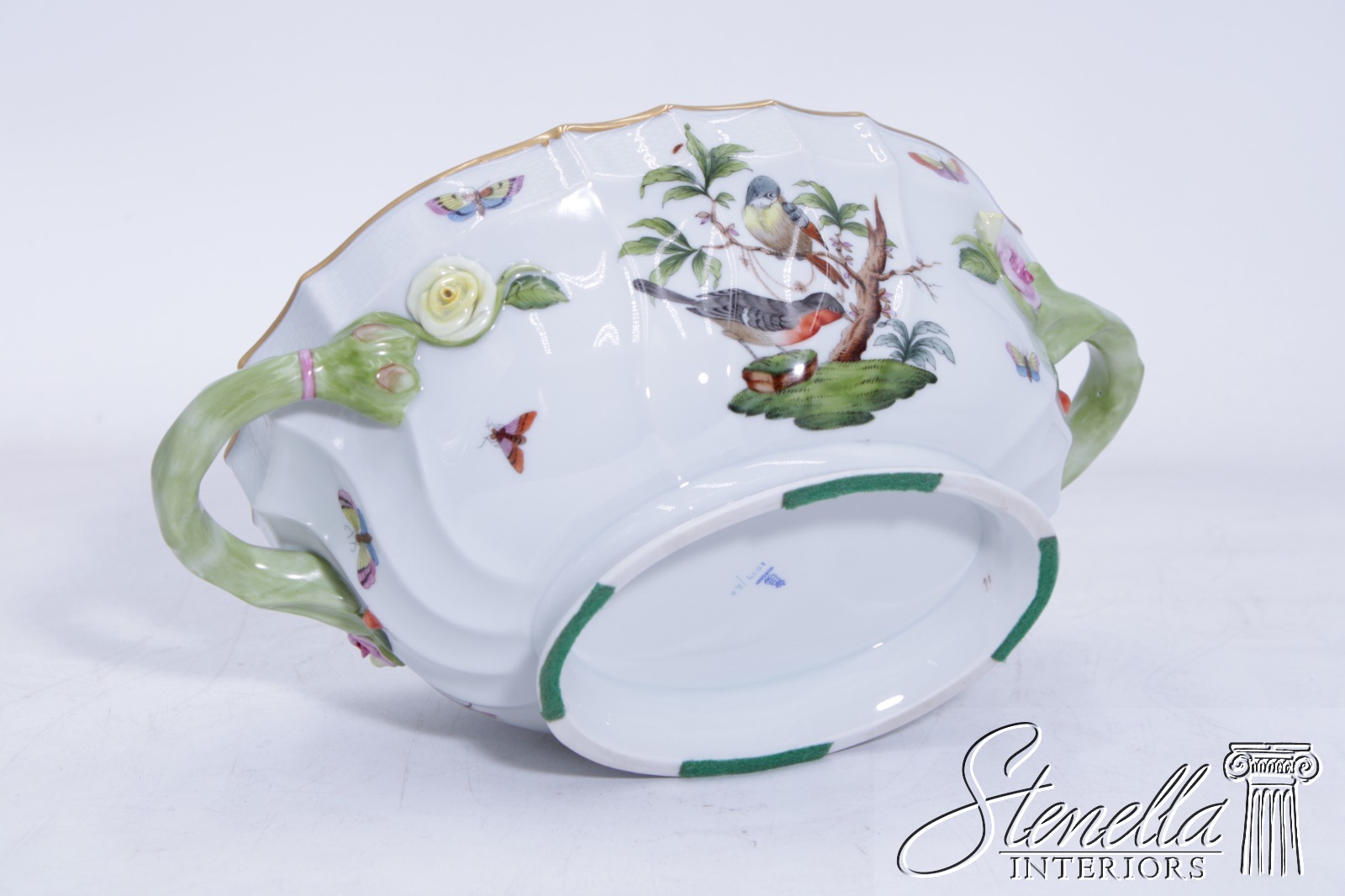
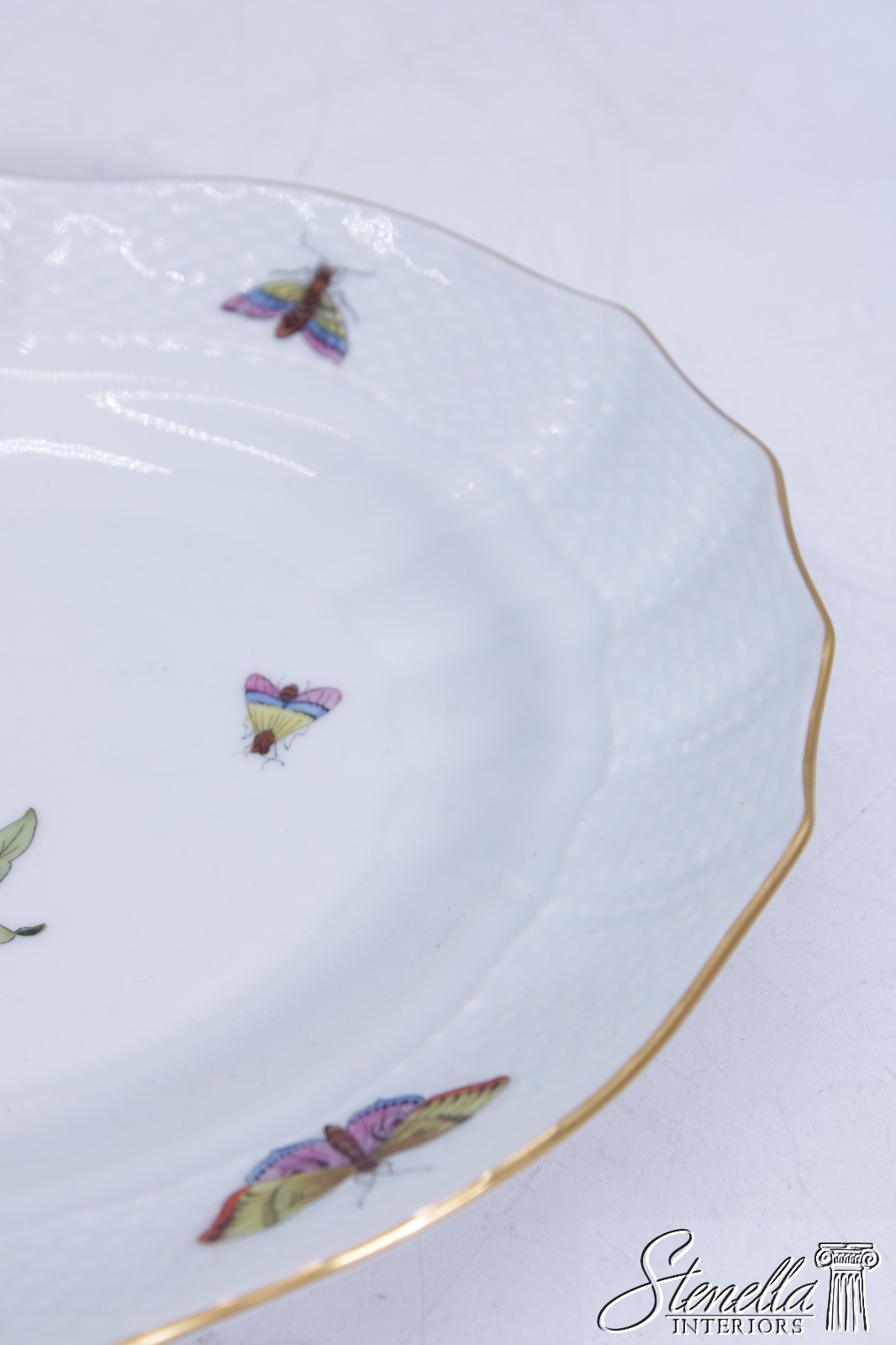
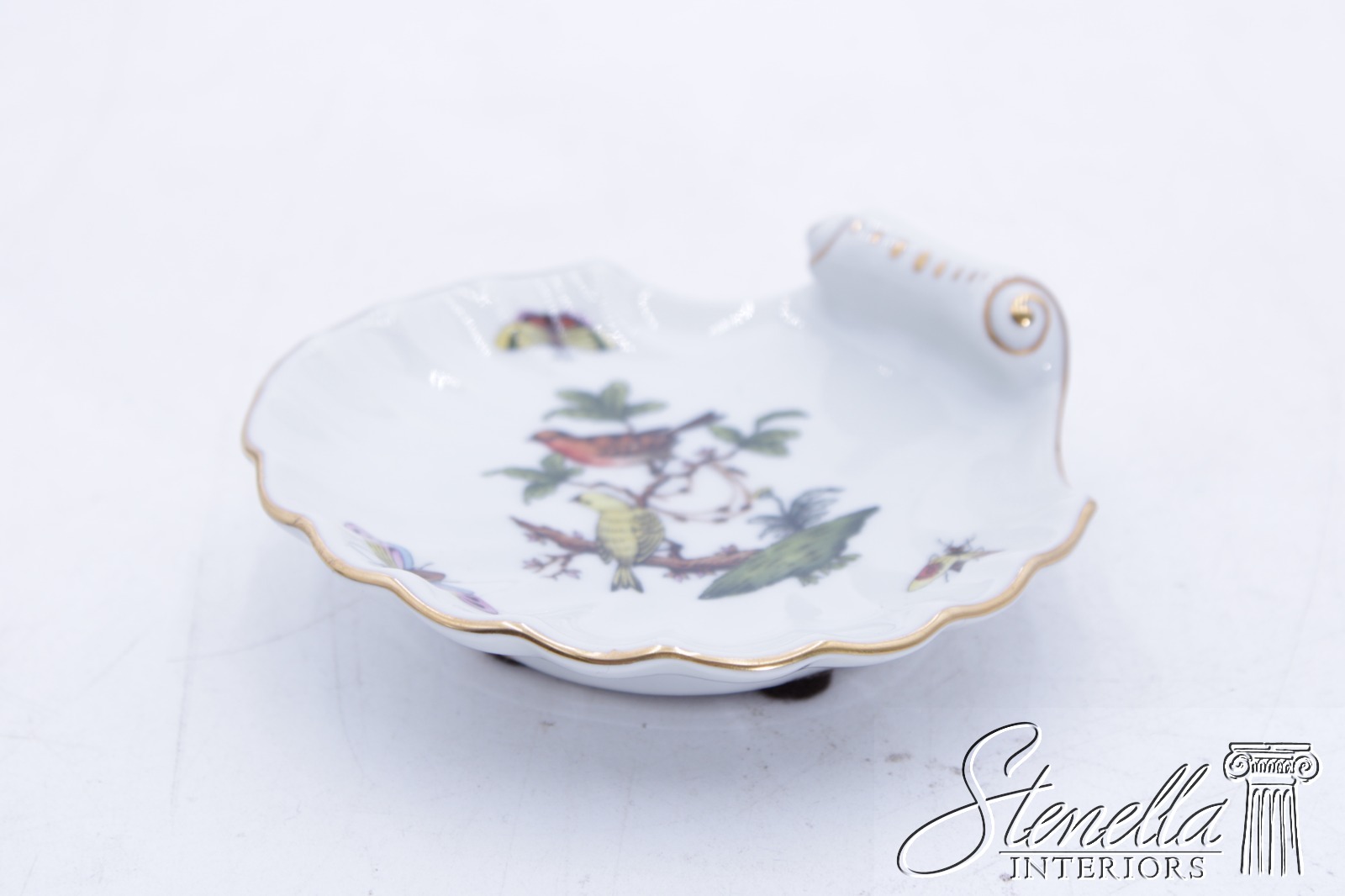
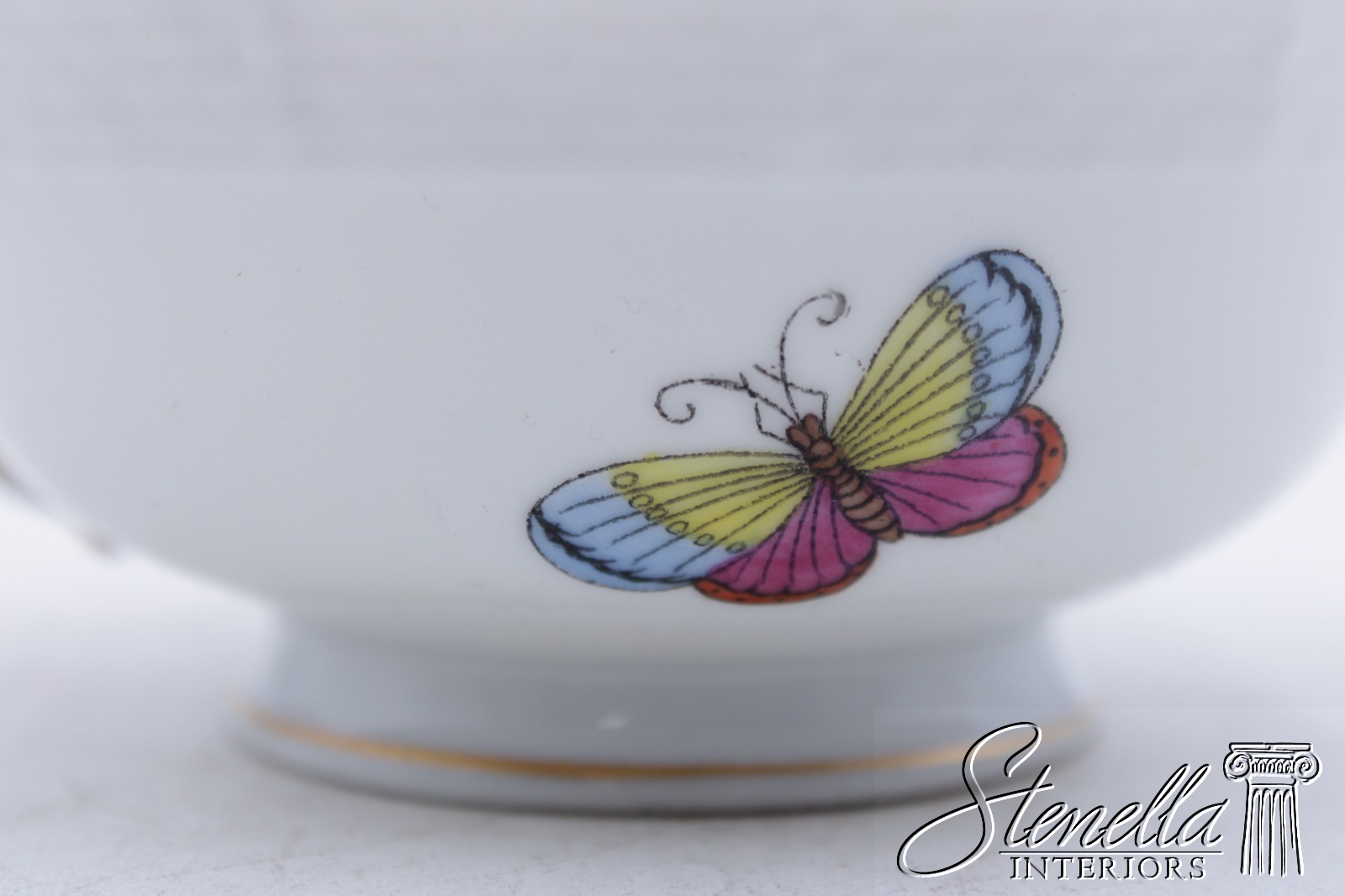
Rothschild Bird Pattern
High Quality Construction
Offered @ Fraction Original Retail Cost
More Images Available Upon Request
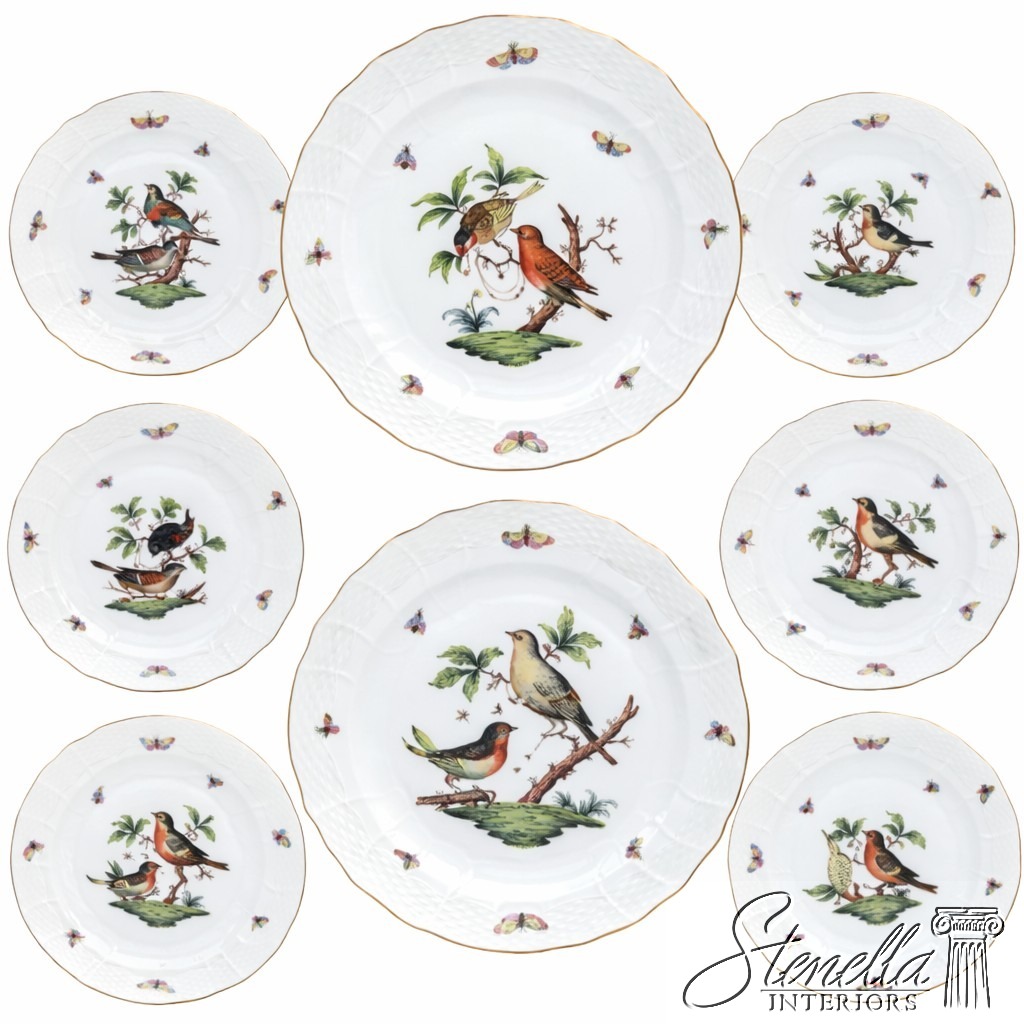
13” Oval Serving Platter 13 3/8 in, #1103 1
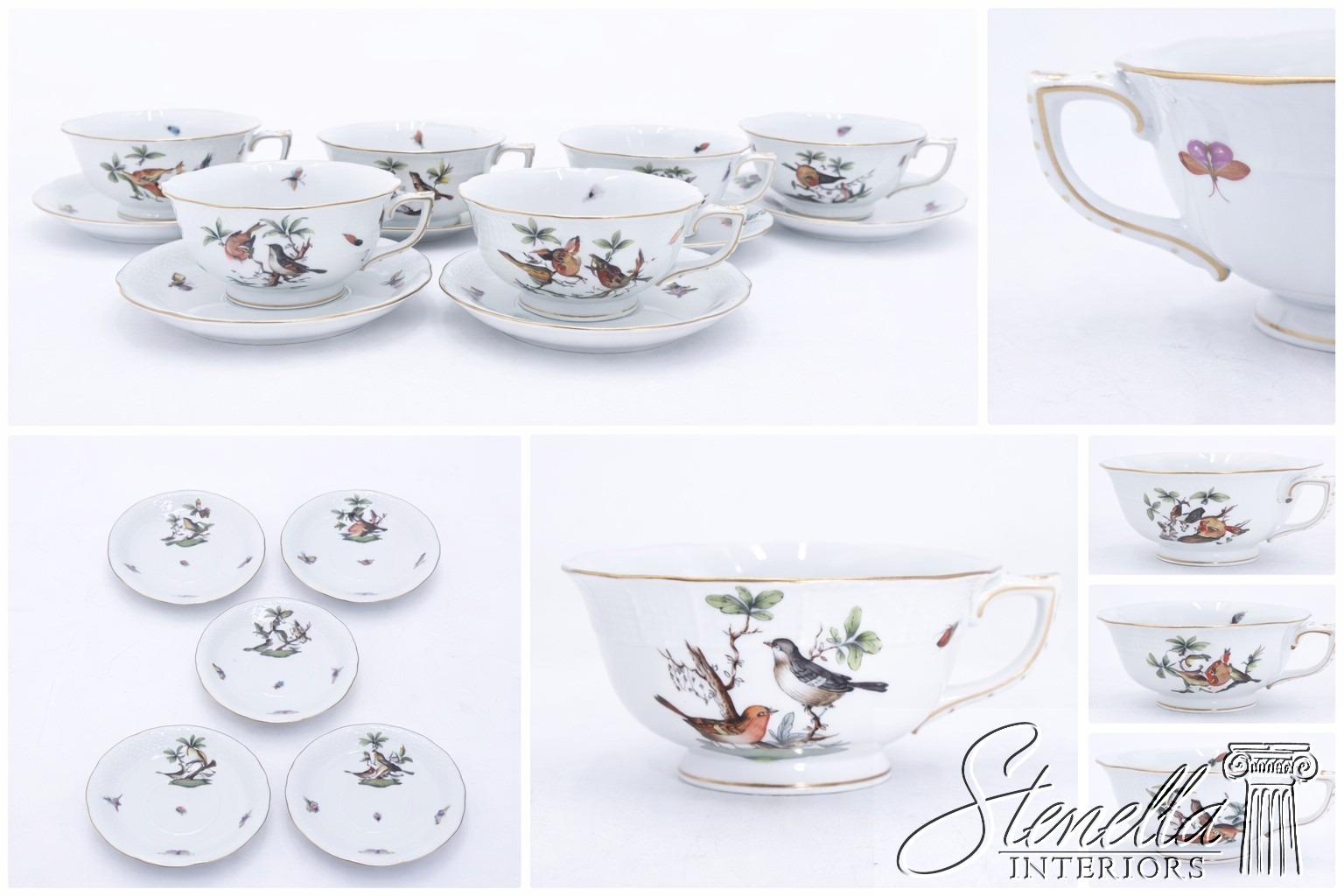
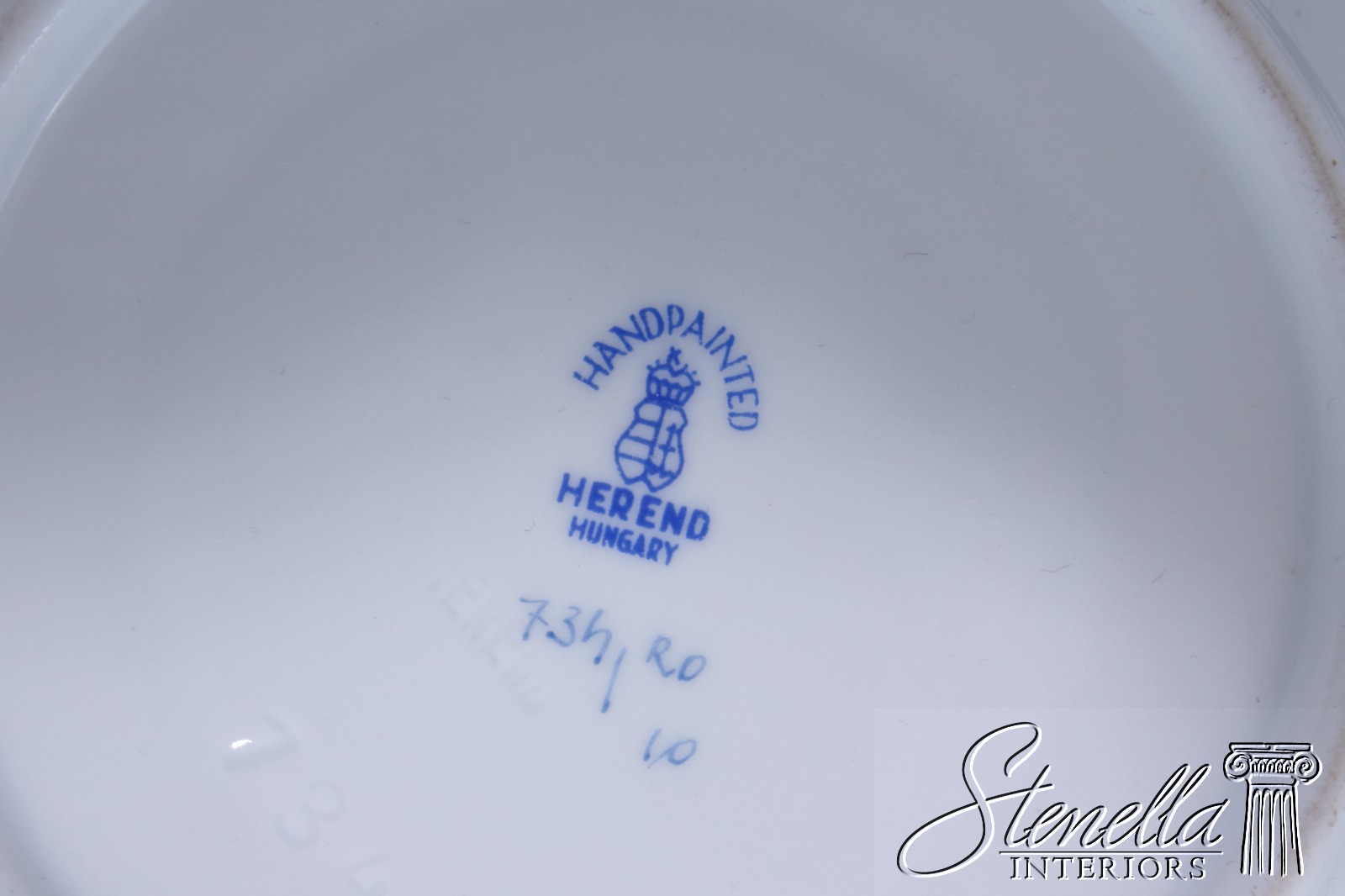
Saucer for Footed Cup 5 3/4 in, #734 18
Footed Cup 2 in, #734 12
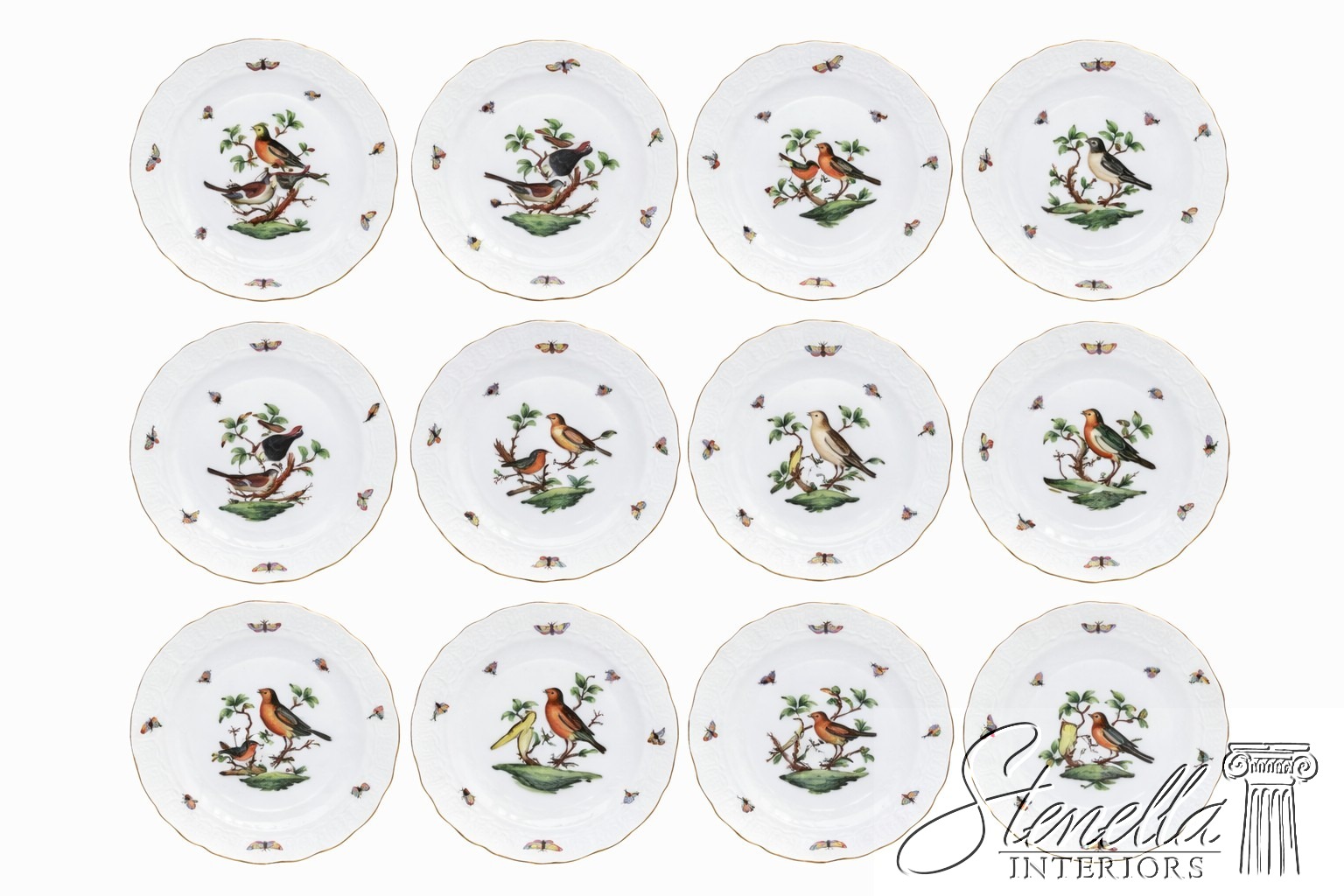
Bread & Butter Plate 6 in, #1515 18
Service Plate (Charger) 11 in, #1527 18
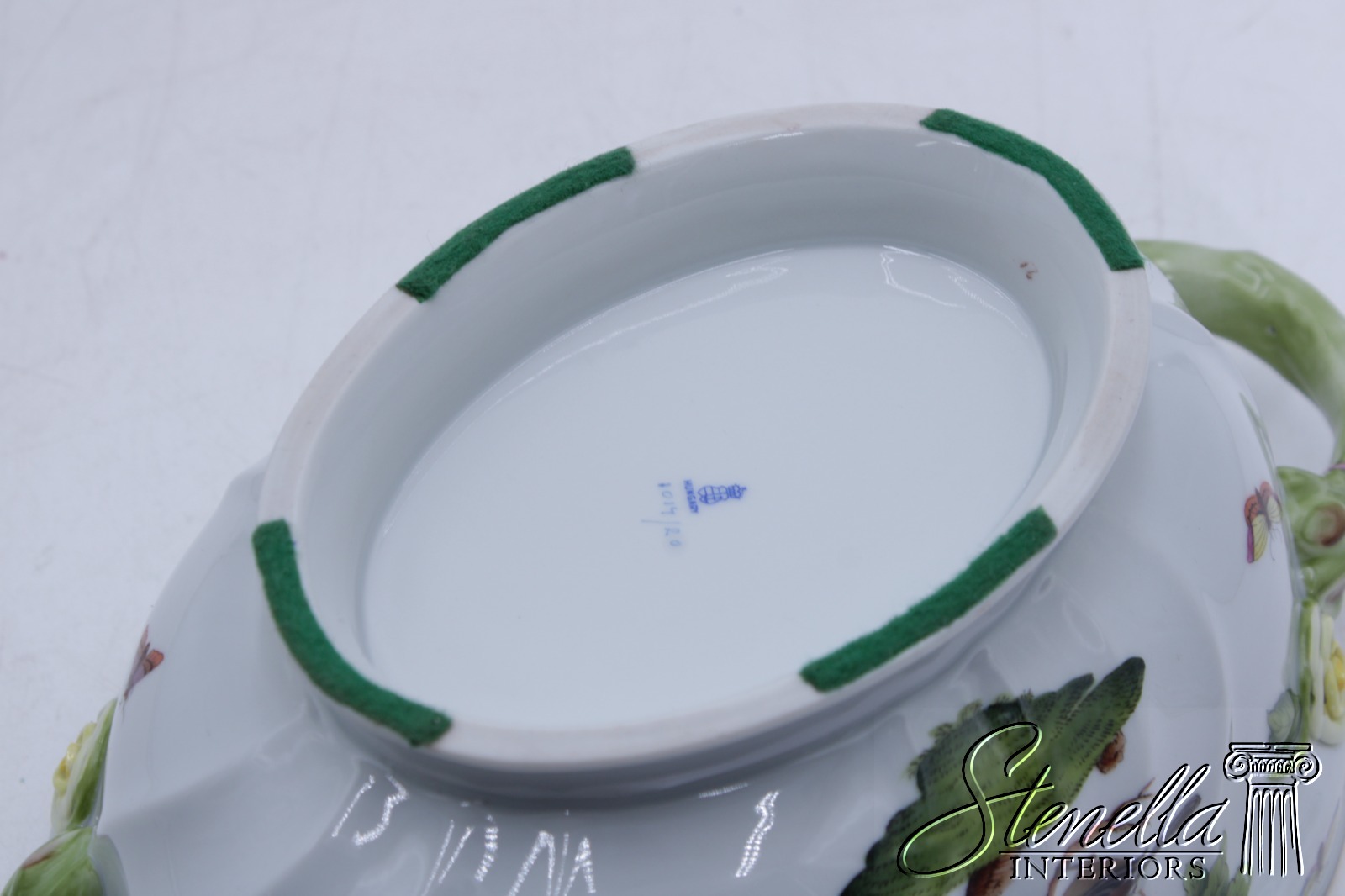
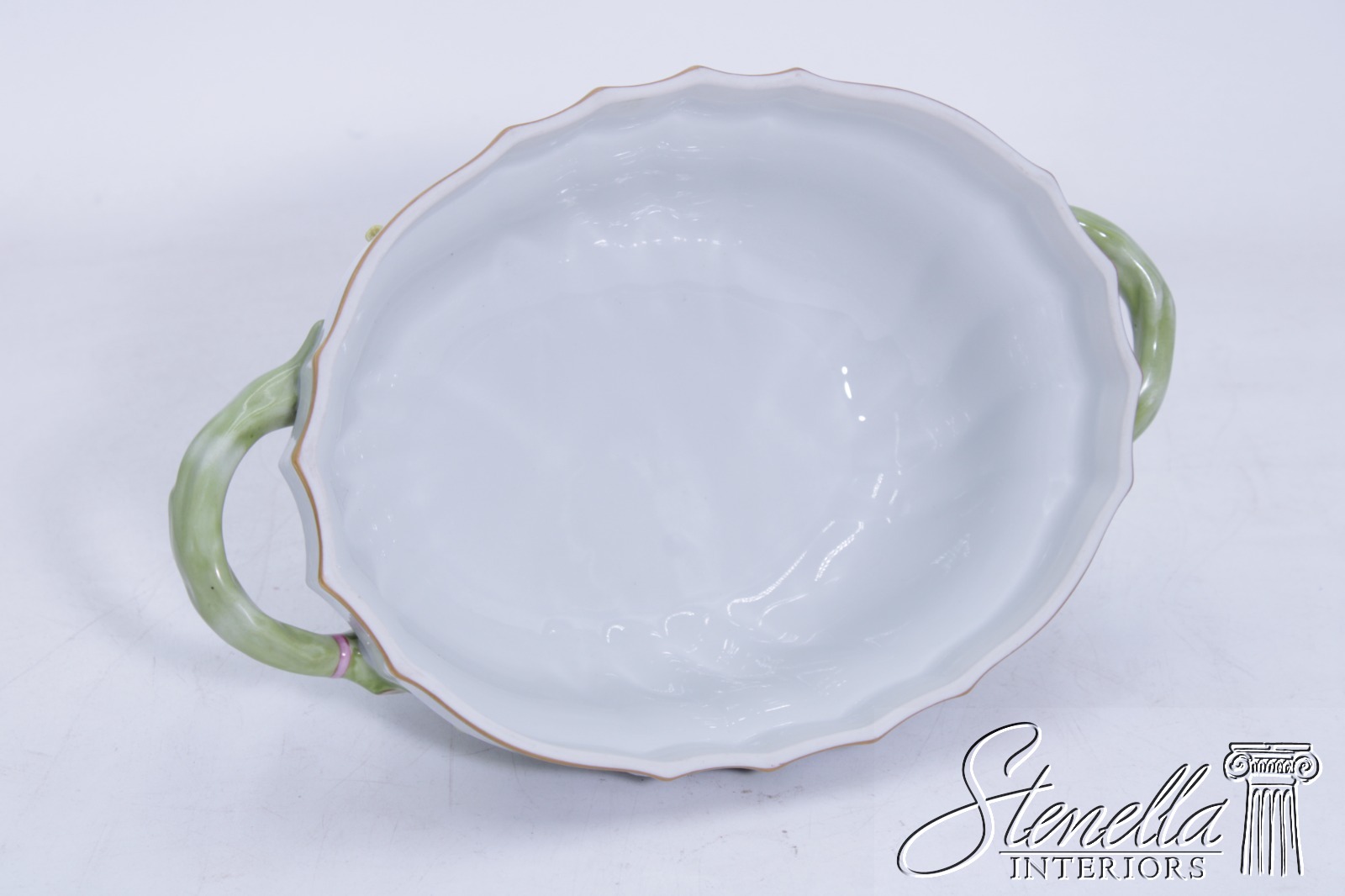
Oval Tureen & Lid 10 1/4 in, #1014 1
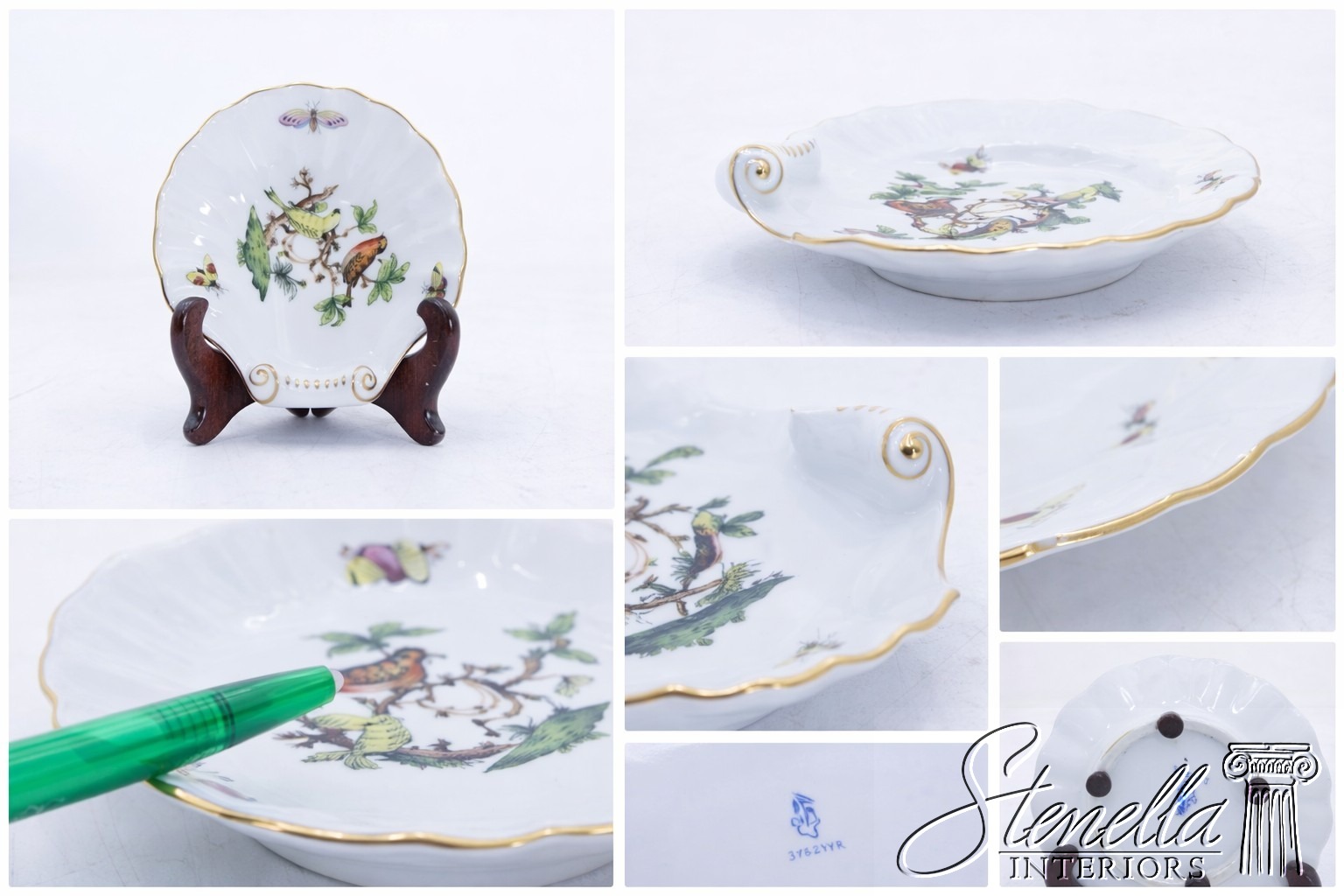
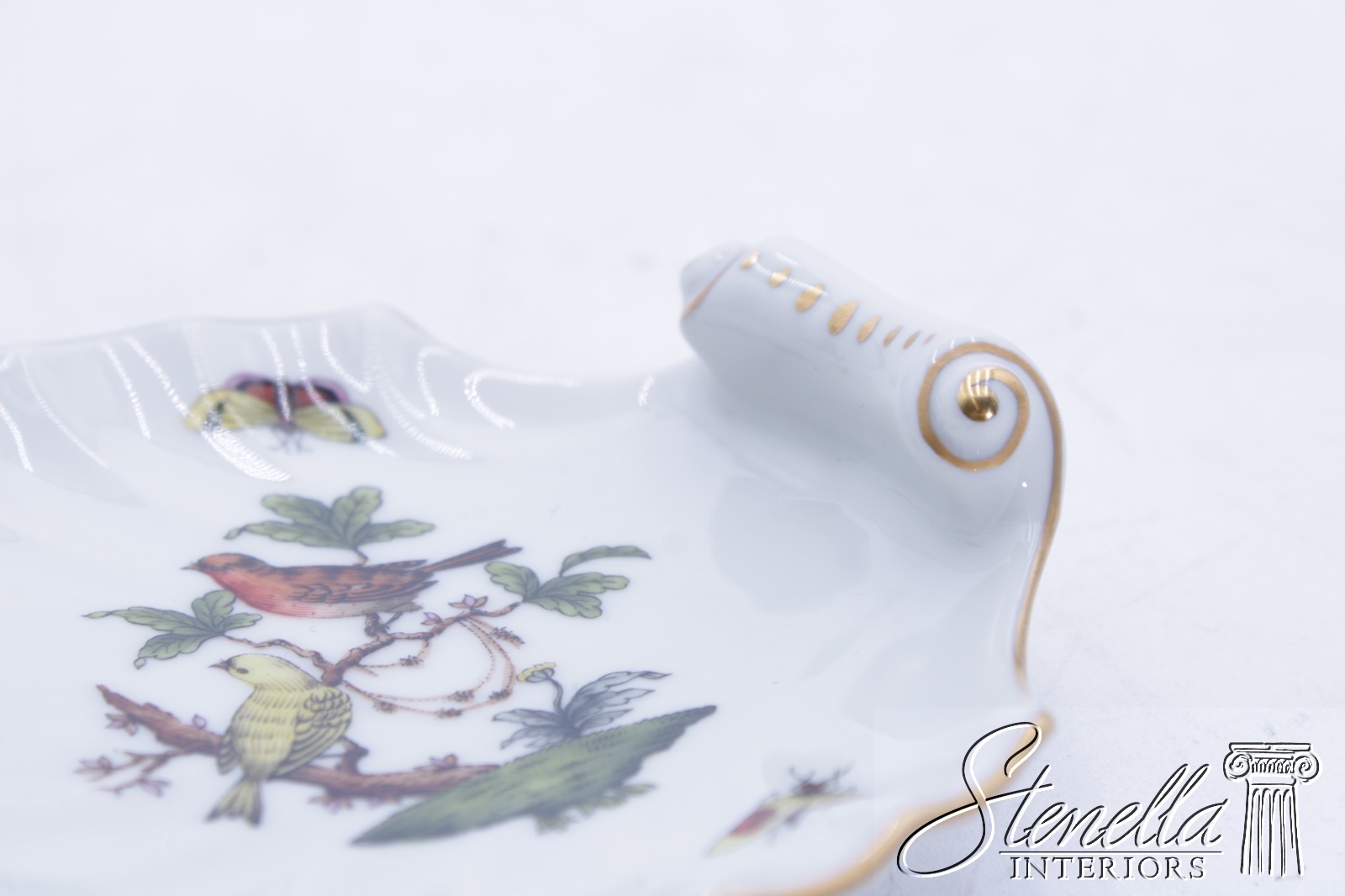
4” Shell Shaped Dish 4 3/8 in, #8762 1
Salad Plate 7 1/2 in, #1518 19
Large Rim Soup Bowl 9 1/2 in, #1501 19
TOTALS 107
The Herend Porcelain Manufactory (Hungarian: Herendi Porcelánmanufaktúra Zrt.) is
a Hungarian manufacturing company, specializing in luxury hand-painted and
gilded porcelain. [1][2] Founded in 1826, it is based in the town of Herend near the city
of Veszprém .
In the mid-19th century, it was purveyor to the Habsburg dynasty and aristocratic
customers throughout Europe. Many of its classic patterns are still in production.
After the fall of communism in Hungary, the factory was privatised and is now 75%
owned by its management and workers. The factory exports to over 60 countries of the
world, with its main markets being Italy, Germany, Russia, Japan and the United States.
History
The factory at Herend was founded in 1826 by Vince Stingl as an earthenware pottery
manufacturing factory; Stingl also carried out research experiments on porcelain
making. Stingl ran out of funds and subsequently went bankrupt; his creditor Mór
Fischer took control of the factory in 1839. Fischer, an ambitious man with new ideas,
started manufacturing artistic porcelain in the same year. At that time it was almost
impossible to replace broken pieces and supply old, classical porcelain dinner-sets from
the Far East and from Europe; so by 1849 Fischer's was selling his wares to the
Hungarian aristocracy.
Herend displayed its designs at the First Hungarian Applied Art Exhibition; the Vienna
Exhibition in 1845; the Great Exhibition in London, 1851; the Exhibition of the Industry of
All Nations in New York, 1853; and the Exposition Universelle in Paris, 1855. The styles
became popular, and orders were received on behalf of several royal courts: Queen
Victoria, Franz Joseph I of Austria and Maximilian I of Mexico.
Some well-known patterns were named for the first customers: (Queen
Victoria, Esterházy, Batthyány, Rothschild, Apponyi). In 1865 Francis Joseph I gave a
noble title to Fischer, in appreciation of his work in porcelain art. From 1872 Mór Fischer
Farkasházy, Purveyor to the Royal Court, was entitled to use the shapes and patterns
of the Manufactory of Vienna, which had closed down.
Condition: